When configuring a workstation, it’s easy to get caught up in spec sheets or overspend on unnecessary features. But the motherboard is the foundation of your system’s stability, capability, and future expansion. Since it’s going to serve you over the long term, choosing the right foundation is essential.
And the simple rule of thumb is that your daily workflow decides what motherboard goes into your desktop. Here is how we choose the right workflow for you.
1. Brand & Product Tiers
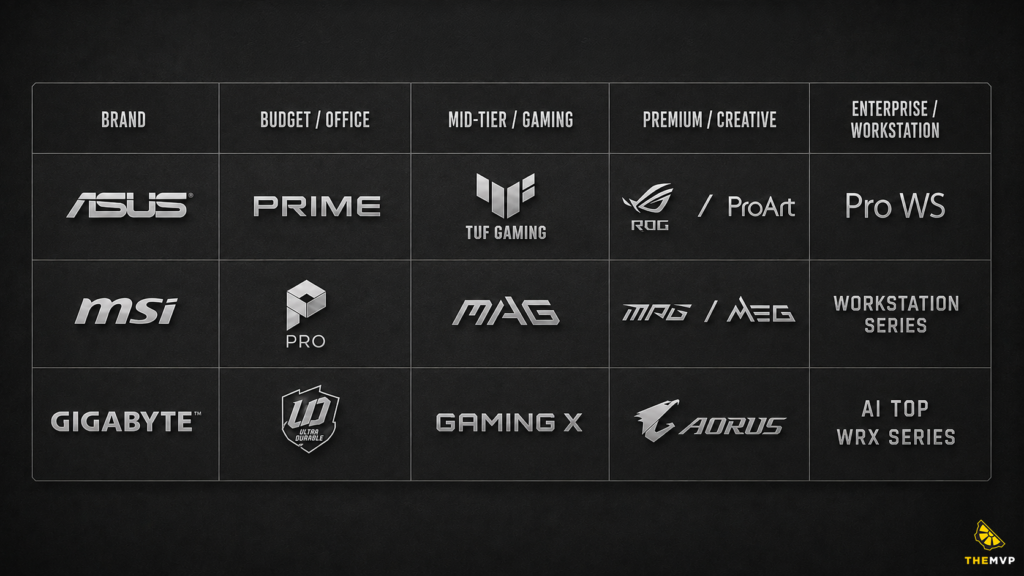
Every major board manufacturer splits their lineup into different product lines.
Higher-tier boards use stronger VRMs (Which means better power delivery for CPUs), more fan/pump headers, upgraded audio chips, and extra M.2 slots for fast NVMe storage.
Some even come with high-wattage USB Type-C PD fast-charging ports on the back.
Choosing a tier comes down to your operational needs. Will you be adding extra NVMe scratch drives down the road as project sizes grow? Do you actually need a specific feature like high-wattage front-panel Type-C charging or high-bandwidth networking to speed up your routine?
If a feature doesn’t directly benefit your daily work, a solid mid-tier board gives you all the performance you need while allocating more budget towards your GPU or CPU.
2. Chipset Selection: Matching Bandwidth to Your Software
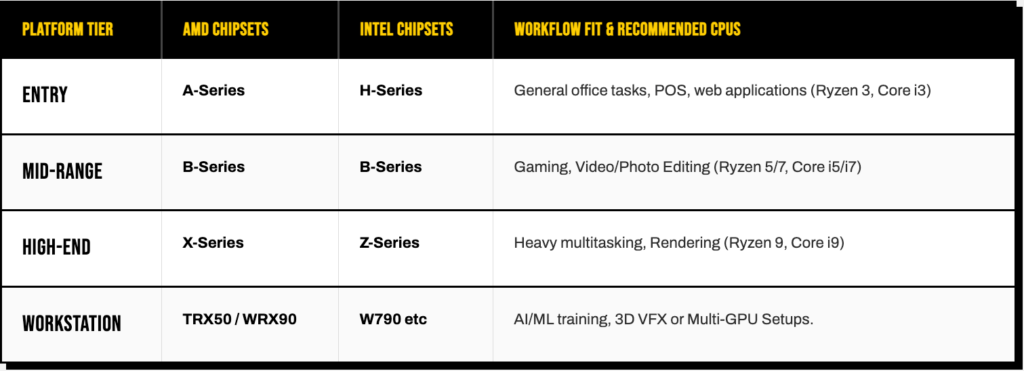
The chipset controls your system’s total bandwidth. Stepping up to higher chipsets adds PCIe lanes, additional NVMe slots, and USB4/Thunderbolt support – but just getting a higher tier does not make the CPU run faster on its own.
For most personal setups, a B-series motherboard offers the optimal balance. Move to X/Z platforms or dedicated workstation boards only when your software requires multi-GPU acceleration, 4- to 8-channel ECC memory, or extensive storage lanes.
3. Form Factor: Size Matters
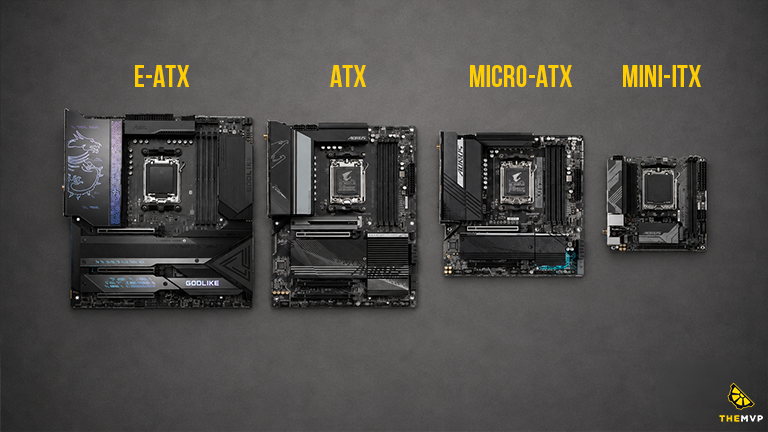
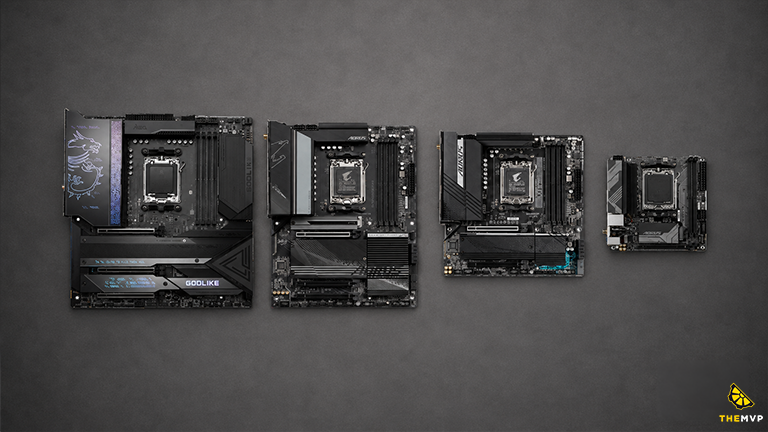
Physical size determines how many expansion cards or drives you can fit but the real factor is how big a box you want on your desk.
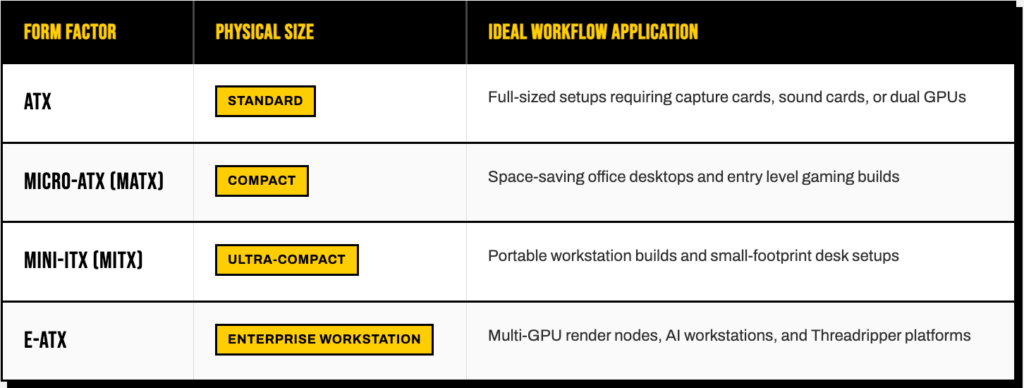
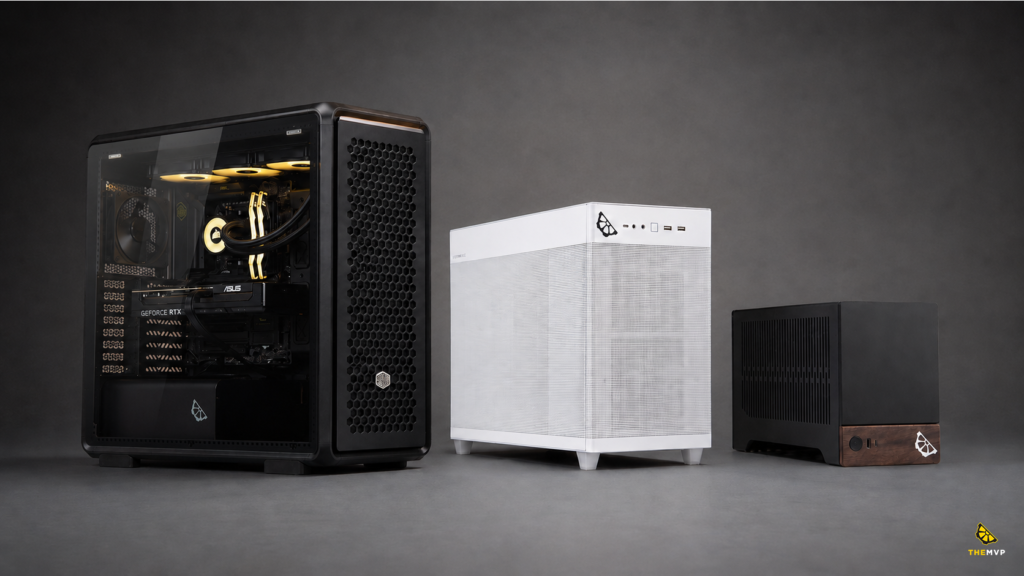
While Mini-ITX is required for compact builds, multi-GPU machine learning rigs or massive storage nodes require standard ATX layouts to maintain proper airflow and slot spacing.
Still Confused?
By matching hardware directly to your applications, we build systems that perform reliably without bloated costs. If you want to talk through the right motherboard selection for your specific software stack, give us a call. Our team is always here to map out the ideal build for your work.