2026, trading is split into two beliefs: markets keep climbing, or they fall hard enough to trigger a reset.
But human beliefs are no longer dominant. Around 60% of global trades are executed automatically by algorithms, not people.

What is Algorithmic trading?
Instead of a human manually clicking “buy” or “sell” based on intuition or a chart, a machine follows instructions to make decisions at speeds and frequencies that a human simply cannot match.
How does it work? Without getting into much detail, here the three main steps-
- The system monitors real-time market data (price, volume, time, news, or even social media sentiment).
- The program checks if this data matches a specific rule written beforehand
- If the condition is met, the computer instantly places an order with the exchanges.
Over 60% of trades are now automated, leveling the playing field for individual investors.

So is it actually better?
So there’s a few factors that actually make it better like its Speed, it can react and make hundreds of trades in a few seconds while humans are still deciding on the first trades.
Humans also suffer from fear and greed when algorithms are 100% disciplined and never deviate from the plan.
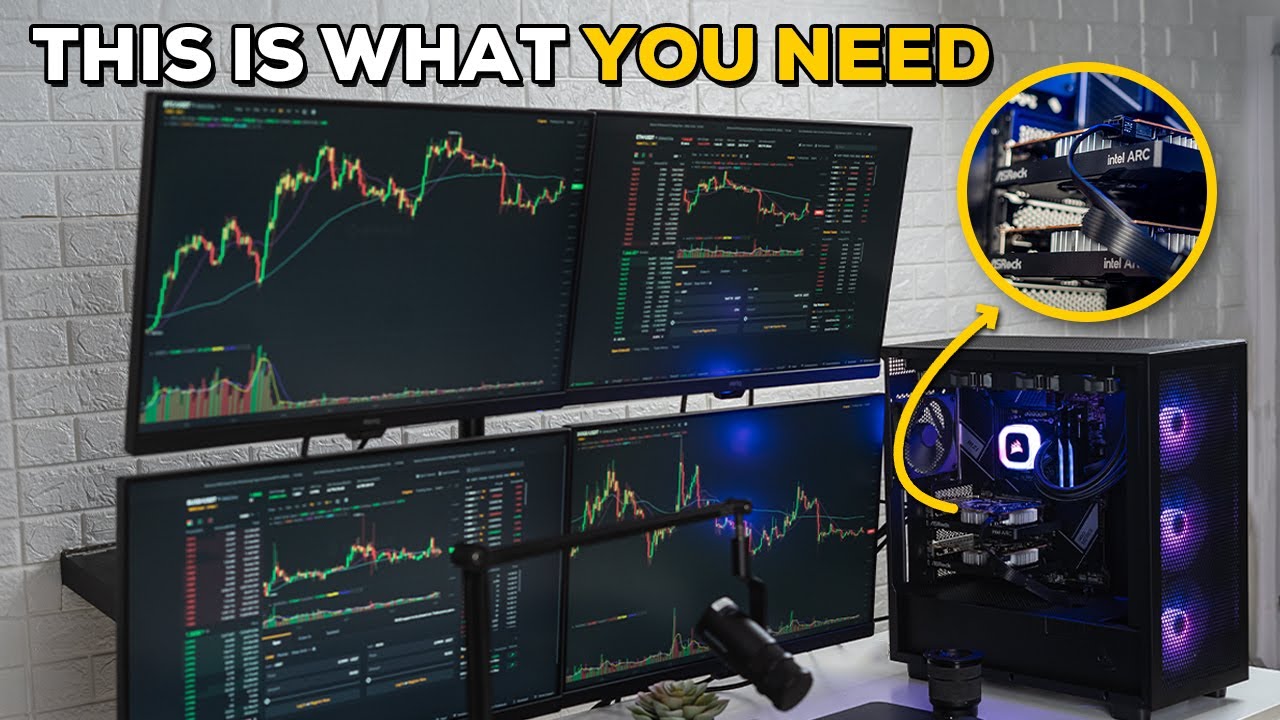
And even with multiple monitors, humans can watch, say, 2-3 charts at once? But an algorithm can scan thousands of assets simultaneously across global markets while backtesting against years of historical data.

The Risks (Obviously)
It’s not a “get rich quick” machine. There are technical and market risks involved:
Like a simple internet outage or a bug in the code can lead to massive losses in seconds. And it’s not as easy as it sounds. A strategy might look perfect on historical data but fail in the real, unpredictable market.
Algorithms are heavily regulated by bodies like the SEBI ( Securities and exchange board of India)
So now that you know, let’s get into what type of hardware you’d need for it.
There is a wide range of different sub-use cases in Algorithmic Trading and you will need different types of hardware accordingly.

1. HFT & Arbitrage
HFT is a cunning system where the algo buys an asset at $10 on Site A and sells it at $10.05 on Site B simultaneously when there are tiny price differences between different global exchanges. The profit might seem low but doing so hundreds of times an hour really builds it up.
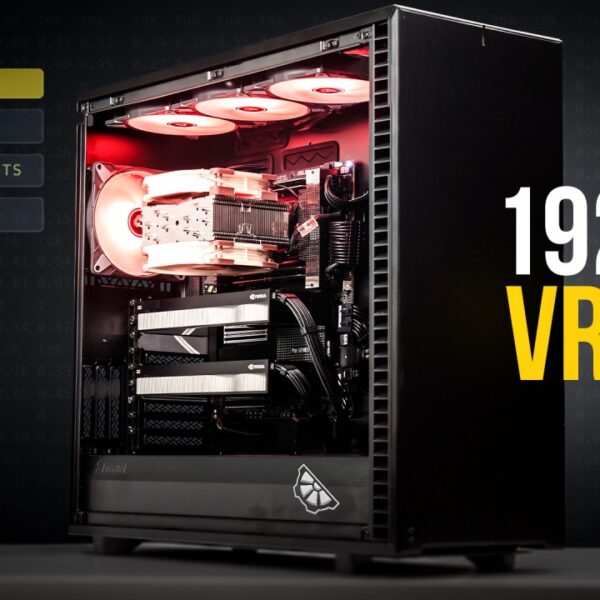
For this you want the highest single-core frequency possible. So the ultra 9 285-k or 9950x3d. Threadrippers only if they are doing massive parallel statistical arbitrage
GPU will be barely used for display so literally any GPU with 2-4 display outputs should be enough…
For the RAM and Storage, it entirely depends on the algorithm but all the builds we have made for this use-case start out at 128GB, and 1TB NVME.
You don’t use standard Ethernet. You have to use NICs (Network Interface Cards). These allow “Kernel Bypass,” meaning the data goes straight from the wire to your code.
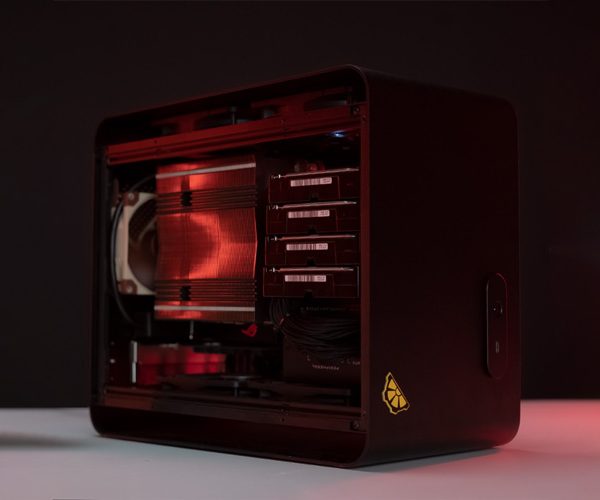
1U or 2U specialized short-depth chassis for racks because they are typically placed in Colocation (Co-lo) facilities—racks inside the exchange’s own data center and the bigger it is the more rent you have to pay.
(the amount of capital required and risk-taking ability, removes regular retailers to take part in HFT)
2. Sentiment Analysis & AI

This is where you run your Local LLMs to read news, tweets, and filings to study the public mood.
A major CEO tweets or an earnings report drops and suddenly the stocks react – and your LLM can take advantage of that.
To run this sort of an algorithm, you need to deploy a Local LLM, now there are people who would rather splurge lakhs on AWS, but we made an entire video showing why it’s better to invest and run locally so check that out. (AWS vs Custom PC for Deep-learning)
For the CPU you can opt for the high-end segments like an Ultra 7 to an Ultra 9 with 128GB of ram and 1-2TB of SSD.
But the main thing you need is a GPU. You need massive amounts of VRAM so depending on the weight of your LLM you could go anywhere from a 5090 to ADA 4000 20GB. All about the budget.
3. Trend-Following & Backtesting
This is the most typical algo. If the price is going up, buy; if down, sell. It also crunches decades of historical data so this is where the AMD Threadripper shines.
Backtesting is entirely parallel, meaning you can test 64 different versions of your strategy at the same time on 64 different cores. Nvidia recently released a paper that GPUs make this process much faster with minimal loss in accuracy but most people still prefer CPUs to process this. So if you trust Nvidia – you could choose from the Quadro lineup of cards.
Again 128GB RAM and 1TB SSD and a cool-looking Cabinet – so you can flex in front of your gamer friends 😉

So yeah that was us trying our best to show how hardware changes widely depending on different types of algorithmic trading and it isn’t black and white. It s kind of grey,
And if you want a similar PC or have a different type of use case, be sure to call us or email us, we are always ready to help.