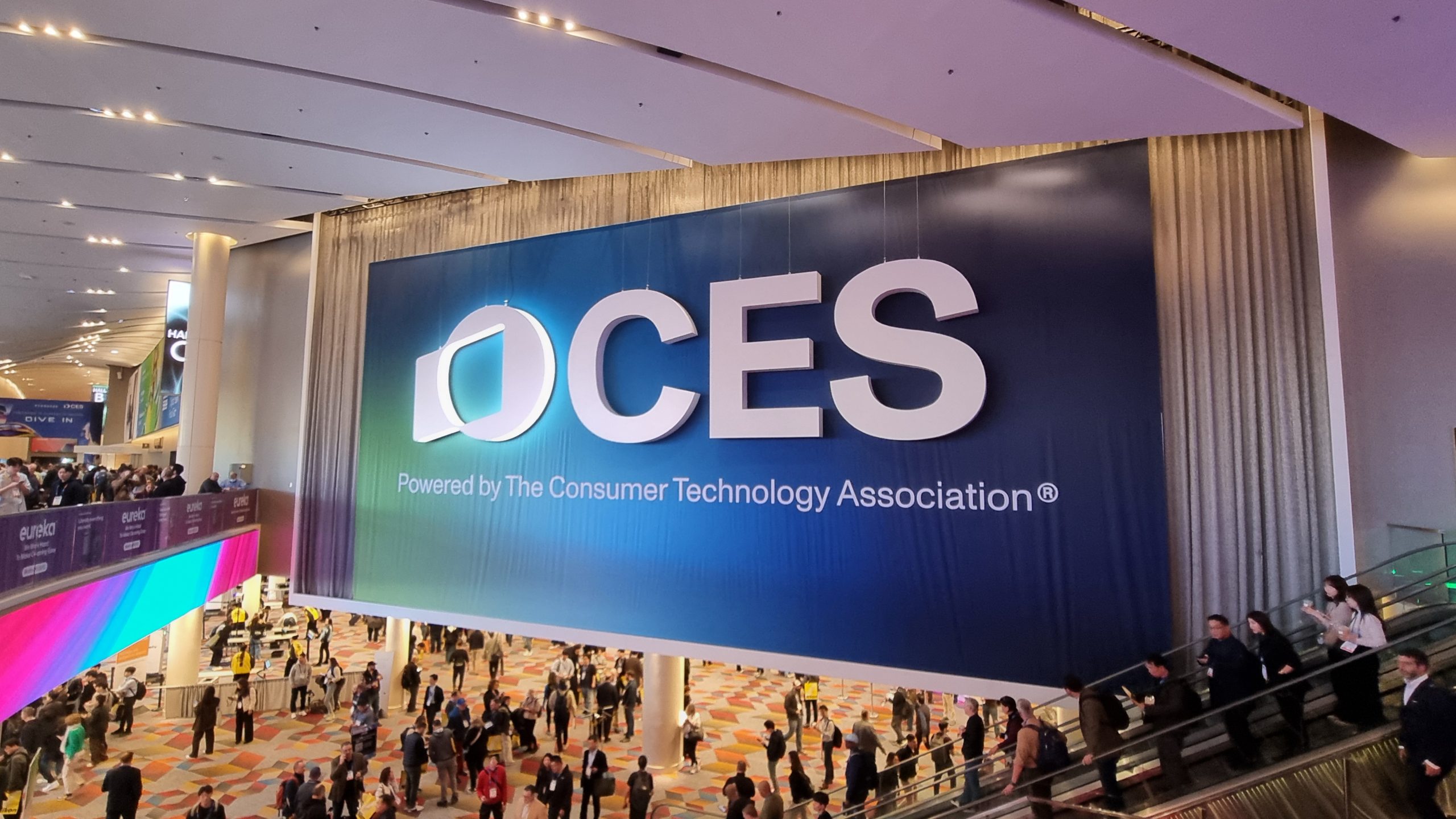
CES 2026 was not about flashy gadgets or experimental demos. The common thread across Intel, AMD, and NVIDIA was a shift from consumer focused innovation to systems designed for long term deployment. What stood out was not any single product, but the direction the industry is moving in.
Intel
Panther Lake and 18A

Intel unveiled Panther Lake, its next generation architecture built on the 18A process. At 1.8 nanometers, this is currently the smallest production node in the industry. This matters because smaller nodes directly translate to better efficiency, higher density, and more headroom for integrated graphics and AI workloads.
Xe3 Graphics and the APU Push

Panther Lake introduces the new Xe3 GPU architecture. Intel claims up to 77% uplift over previous generations. These are Arc class integrated graphics with denser GPU cores, not a minor refresh.
The real significance is positioning. Intel is clearly targeting handhelds and APU driven systems, an area where AMD has dominated. For the first time in years, Intel looks serious about competing here.
AMD

AMD’s keynote made it clear that their focus was AI platforms, data centers, and large scale infrastructure.
AMD revealed the Helios AI Rack, built to the OCP standard and developed with Meta. The rack weighs around 700 lbs and delivers roughly 2.9 exaflops of compute.
It is built on AMD’s latest 2 nanometer chiplet architecture, with around 320 billion transistors and 432GB of HBM4 memory per rack.
Ryzen 9850X3D

On the consumer side, AMD announced the Ryzen 9850X3D as its fastest gaming CPU. In practice, it is an overclocked 9800X3D. The gain is around 5% , achieved through a higher boost clock. AMD already leads gaming CPUs and did not feel pressure to reinvent that segment this year.
NVIDIA
DLSS 4.5

Announced at CES 2026, DLSS 4.5 introduces 6X Multi-Frame Generation, producing five AI frames for every one rendered. This enables 240+ FPS path-traced gaming at 4K. The update also features a 2nd-Gen Transformer Super Resolution model which will be made available for all RTX GPUs.
Vera Rubin Rack and Memory Scale

NVIDIA also unveiled its Vera Rubin rack scale system combining Rubin GPUs and Vera CPUs. And a single Rubin GPU delivers inference performance which is roughly 5x the performance of the original Blackwell.
The more important detail is memory. One rack contains roughly 75TB of fast memory with bandwidth near 260TB per second. That is equivalent to about 2400 consumer systems with 32GB of RAM each. This explains where global memory supply is going. AI infrastructure is absorbing it at an unprecedented rate.
The Rise of Physical AI
In 2024, CES featured around 5-10 humanoid robots. In 2025, that number doubled. In 2026, it reached 38. This growth signals a transition from concept demos to deployable systems.

CES has a long history of vaporware. Products that look impressive and never reach daily use. This year was different. Many robots on display are already operational. Boston Dynamics Atlas is the clearest example. First revealed over a decade ago, it is now working inside Hyundai factories. This is no longer experimental hardware. It is active industrial labor.
Why This Shift Is Happening Now

Physical AI is advancing because training no longer happens in the real world. NVIDIA, along with partners like Siemens and Caterpillar, relies on simulation. Robots are trained inside highly accurate digital replicas of real factories using Omniverse.
Instead of learning on live factory floors where mistakes are expensive, robots spend millions of hours in digital environments. By the time they are deployed, they already have years of simulated experience.
Once deployed, these systems do not require onboarding, retraining, sick leave, or rest. They operate continuously and predictably. Error rates drop and output becomes consistent. From a business perspective, this is highly attractive labor.
This is not a distant future scenario. It is the early phase of mass adoption. Robots are moving from demos to factories, and from factories toward everyday environments. The timeline is measured in years, not decades.
This is not just another technology cycle. It marks the beginning of a structural shift in how work, production, and computers are organized.